


Sindh unveils Rs3.65 trillion budget with major PPP-led development push
 Web Desk
|
3 hours ago
Web Desk
|
3 hours ago
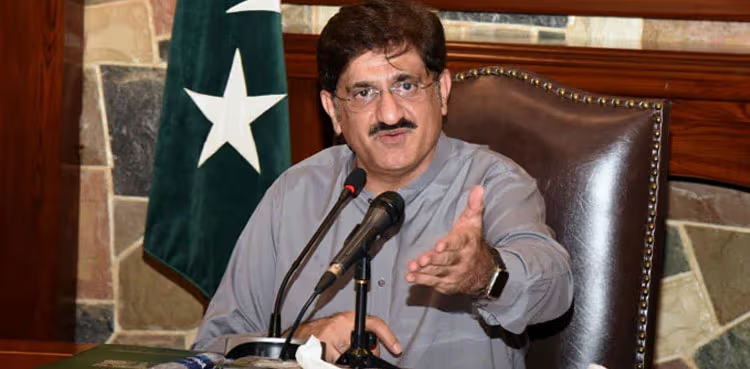
Sindh Chief Minister Syed Murad Ali Shah has defended the province’s Rs3.652 trillion budget for 2026-27, calling it a fiscally responsible financial plan prepared amid federal revenue shortfalls, rising expenditure pressures and broader economic uncertainty.
Addressing a post-budget press conference in Karachi, he said the province had faced a significant revenue gap from federal transfers and tax collections, creating an overall fiscal shortfall of nearly Rs300 billion. Despite these constraints, he maintained that Sindh had preserved a strong development agenda while adhering to financial discipline.
He highlighted that the province had contributed Rs260 billion as a constitutional grant for national defence purposes, noting that it was the first time such a provision had been activated. He credited the decision to constitutional guidance and political consensus.
The chief minister said Sindh’s Annual Development Programme had been reduced to Rs720 billion, with priority given to completing over 2,000 ongoing schemes instead of launching new projects. He added that salaries, pensions and institutional grants remained the largest share of expenditure, with minimum wage raised to Rs43,000.
Murad Ali Shah announced major long-term initiatives under public-private partnership (PPP) arrangements, including the proposed Keti Bandar deep-sea port, a Sindh International Financial Centre in Karachi, and a Green Energy Data Centre aimed at attracting global tech investment.
He said the province was also expanding solar energy access for low-income households and introducing financing schemes for middle-income families. In agriculture, planned reforms would allow small farmers to form collectives to improve access to credit and mechanisation.
The chief minister claimed Sindh’s PPP model had gained international recognition and pointed to infrastructure projects, airports, and environmental initiatives as examples of success. He also raised concerns over water shortages, accusing federal water authorities of mismanagement and warning of severe impacts on agriculture.
He concluded that governance reforms and anti-corruption measures were being strengthened to ensure efficient use of public funds.



AI museum recreates Amazon rainforest experience in Los Angeles

Sindh unveils Rs3.65 trillion budget with major PPP-led development push




54 minutes ago
1 hour ago

1 hour ago

2 hours ago

3 hours ago
3 hours ago
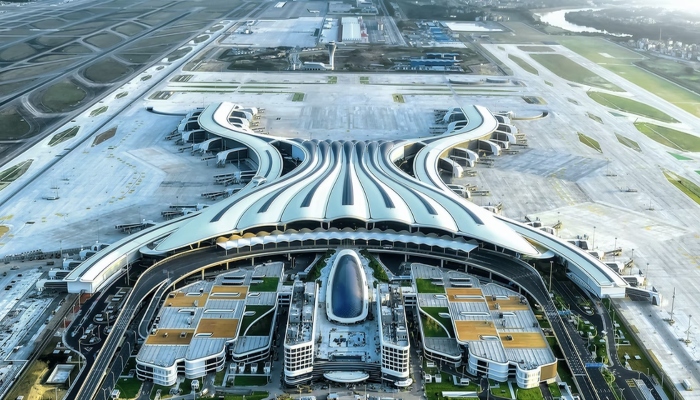
- The title of the world’s most beautiful airport has been awarded to China’s Guangzhou Baiyun International Airport Terminal 3. According…
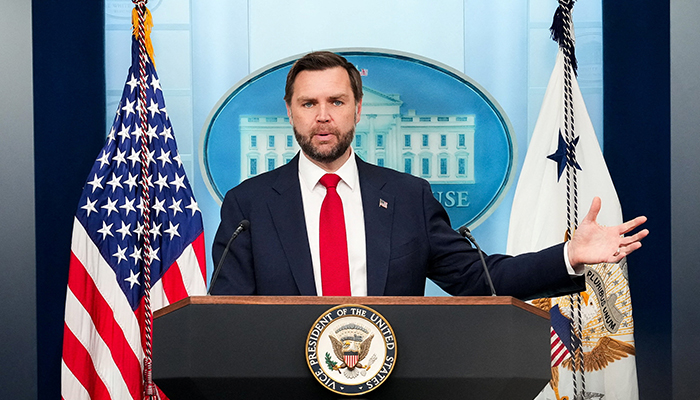
- US Vice President JD Vance has said that the agreement reached with Iran could play a significant role in promoting…
- US President Donald Trump has said that the United States is committed to peace and expects a complete ceasefire across…
- Ukraine carried out a large-scale drone attack on the Russian capital Moscow on Thursday, reportedly launching hundreds of drones and…


 Karachi is witnessing a worrying surge in congenital heart diseases among newborns, with medical experts warning that thousands of children…
 Pakistan now has the highest diabetes rate in the world, according to the latest IDF report. The report shows that…
- South Africa, Eswatini, and Zambia have begun administering lenacapavir, a groundbreaking HIV-prevention injection, marking a major milestone in the fight…
 KARACHI: The Sindh High Court’s Constitutional Bench was informed on Monday that all milk samples collected in Karachi are harmful…






- Residents and visitors in the hill station of Murree have…54 minutes ago
- Pakistan’s national space agency, SUPARCO, has issued an El Nino…1 hour ago
- A new immersive art museum in Los Angeles is offering…1 hour ago
- The Pakistan Stock Exchange (PSX) witnessed a sharp reversal…2 hours ago